UCLA · Knee Exoskeleton for Quadriceps Myopathy
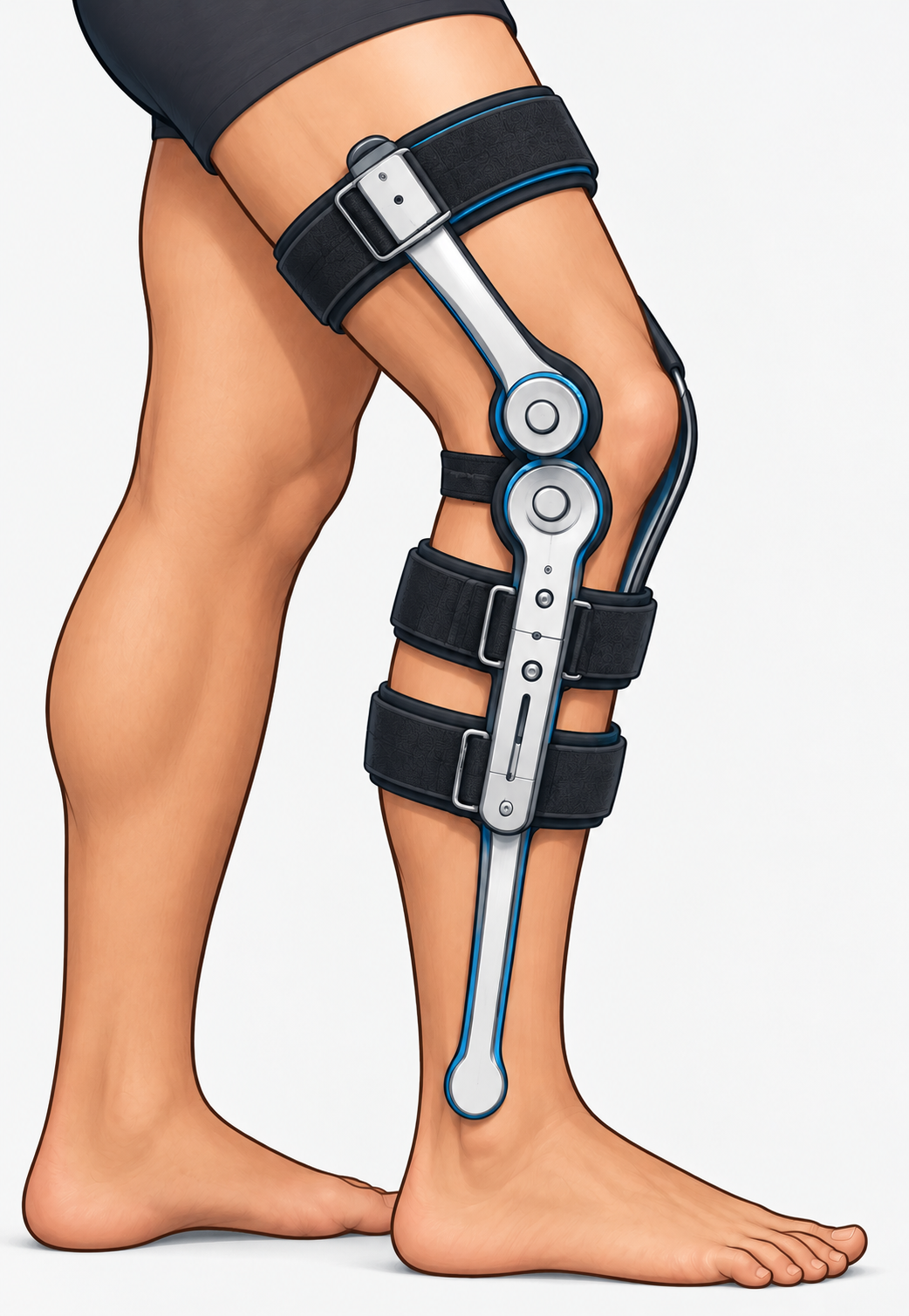
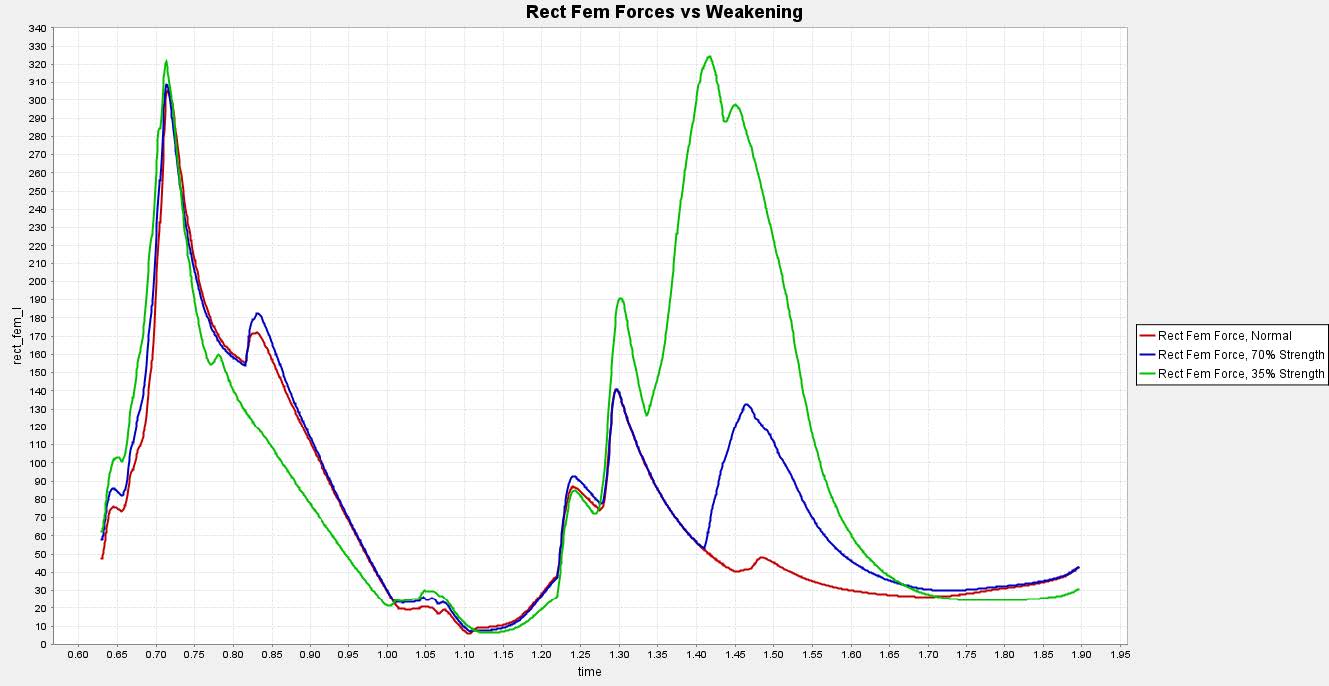
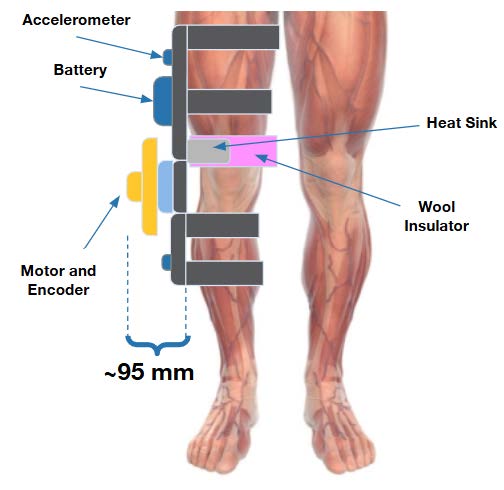
Designed an assistive knee exoskeleton targeting patients with quadriceps myopathy — a progressive condition causing 40–70% loss of vasti muscle force — restoring near-normal gait kinematics through motorized joint torque assistance. OpenSim computed muscle control (CMC) was used to simulate pathological gait at two deficit levels (35% and 70% vasti strength), identifying compensatory overactivation in the rectus femoris, hamstrings, and gluteus maximus that motivated the torque profile design.
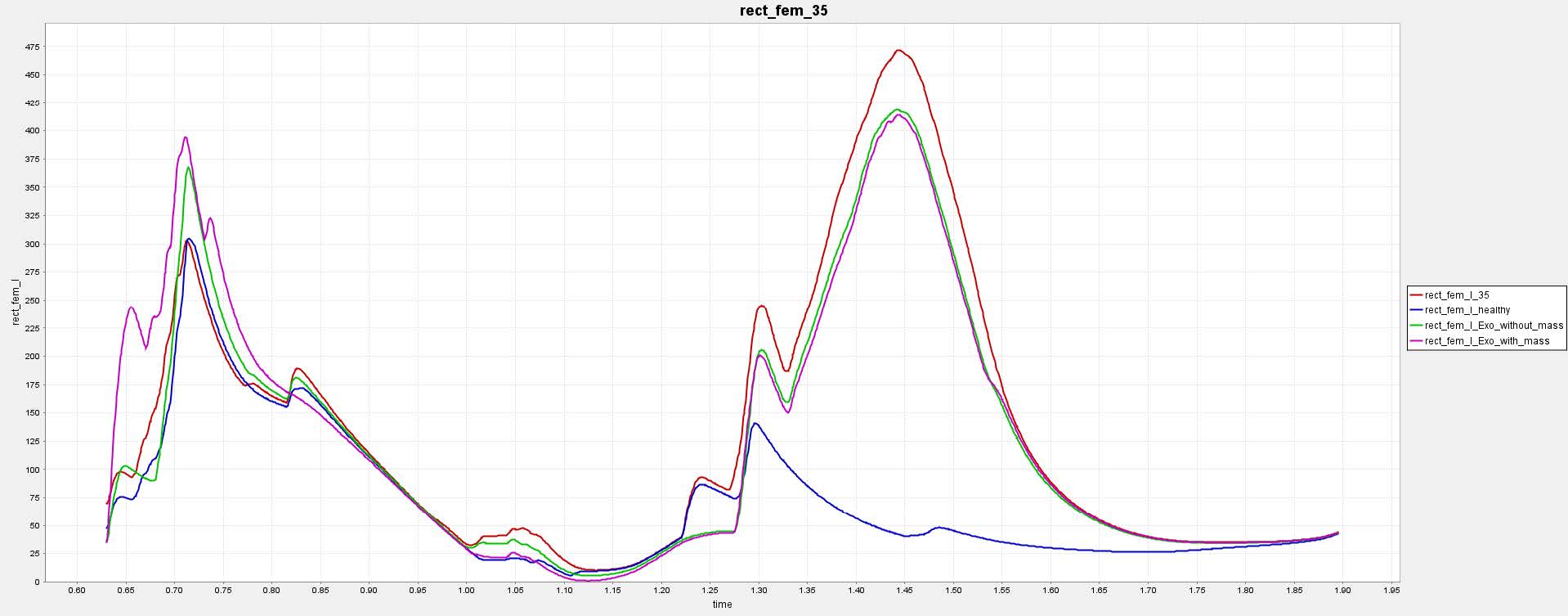
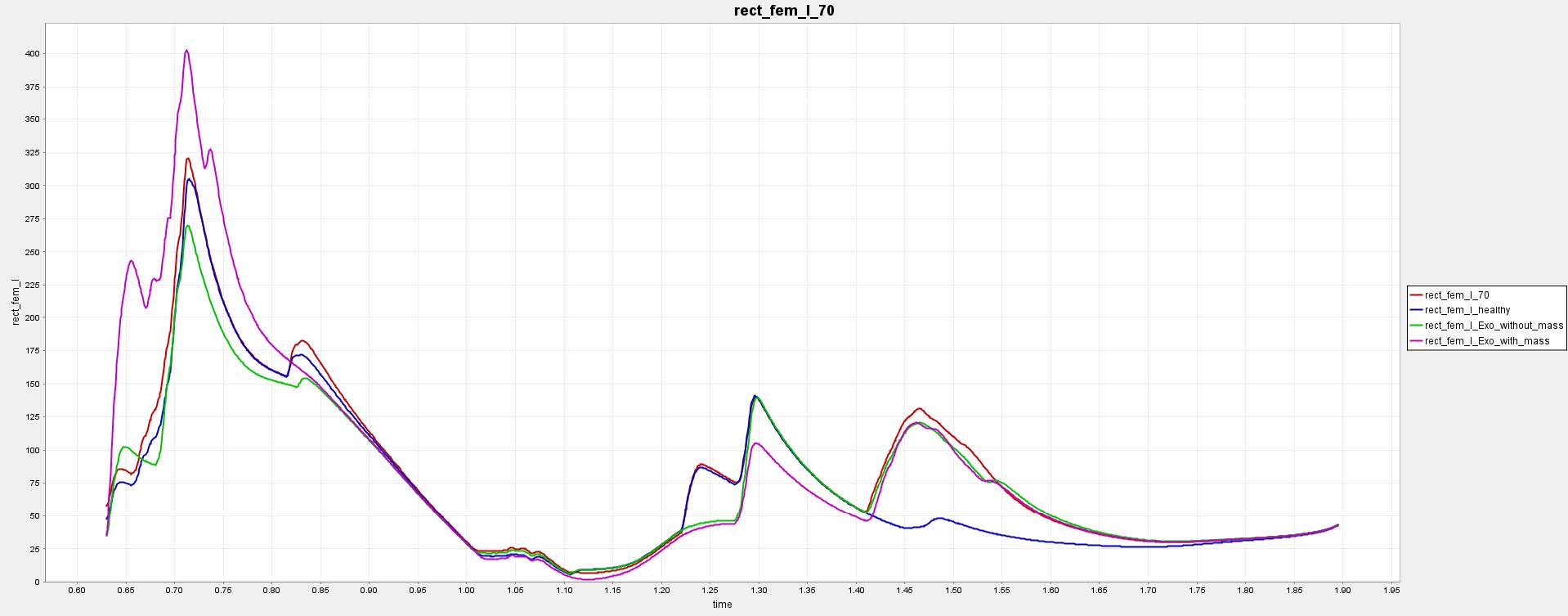
A square-wave extension torque profile was derived from the force compensation requirements at two critical gait phases: swing initiation (~0.75 s) and mid-stance loading (~1.4 s), yielding peak torques of 9 N·m and 18 N·m respectively via a vasti moment arm of 0.045 m. Motor and transmission selection were optimized in MATLAB through brute-force search minimizing I²R heat losses across the candidate space, selecting a GPM12 pancake motor paired with a 50:1 planetary gearbox (HarmonicDrive CSF-8-100-2UP).
Series elastic actuator (SEA) analysis confirmed negligible benefit for this torque-dominated application, simplifying the final design. Battery sizing (72.52 Wh LiPo) was calculated to sustain approximately 3,750 steps per charge. The complete device — motor, gearbox, structural brace, sensors, and battery — weighs approximately 3.5 kg at an estimated cost of ~$2,000. Re-simulation in OpenSim with the applied torque profile confirmed meaningful reduction in compensatory muscle activation and restored gait symmetry.